Inspiration
Where the idyll came from
Cricket grounds, aunts, London clubs, a Norfolk house, and a Warwickshire bowler who never knew his name would outlive him.
§
Percy Jeeves
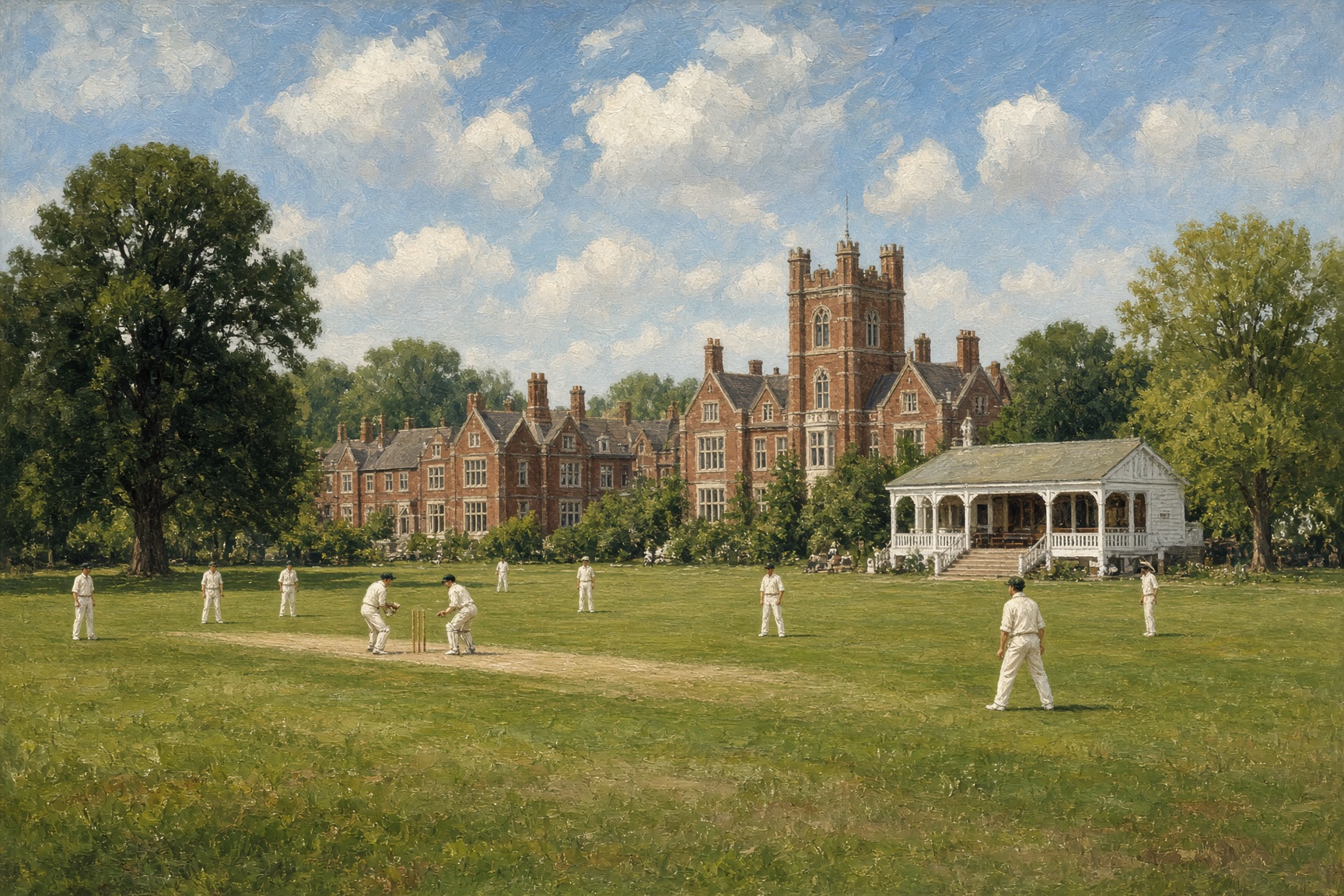
In August 1913 Wodehouse watched Warwickshire play Gloucestershire at Cheltenham College and admired a young professional’s bowling action. In 1916, in New York, needing a name for an omniscient valet, he remembered Jeeves. Percy Jeeves of Goole and Warwickshire was killed on the Somme that July, never knowing. Wodehouse later wore a Warwickshire tie and confirmed the debt in a letter of 1967. A blue plaque stands in Goole.
Aunts, and the absent parents
Left in England from the age of two while his parents remained in Hong Kong, he was farmed among aunts and uncles. Aunt Agatha — “who eats broken bottles and wears barbed wire next to the skin” — is the nightmare of that arrangement; Aunt Dahlia, of Brinkley Court, is the consolation. Norman Murphy and others have mapped particular relatives onto particular dragons, but the structure is the childhood itself.
Dulwich College
The school stories are Dulwich under other names: Wrykyn, St Austin’s, Sedleigh. Cricket and rugby are treated as matters of state. Mike Jackson is the boy Wodehouse would have liked to be; Psmith is the boy who talks his way out of the scrape. He edited The Alleynian, wrote comic verse, and never recovered from the happiness. In old age he still took the college magazine.
The Drones, and clubland
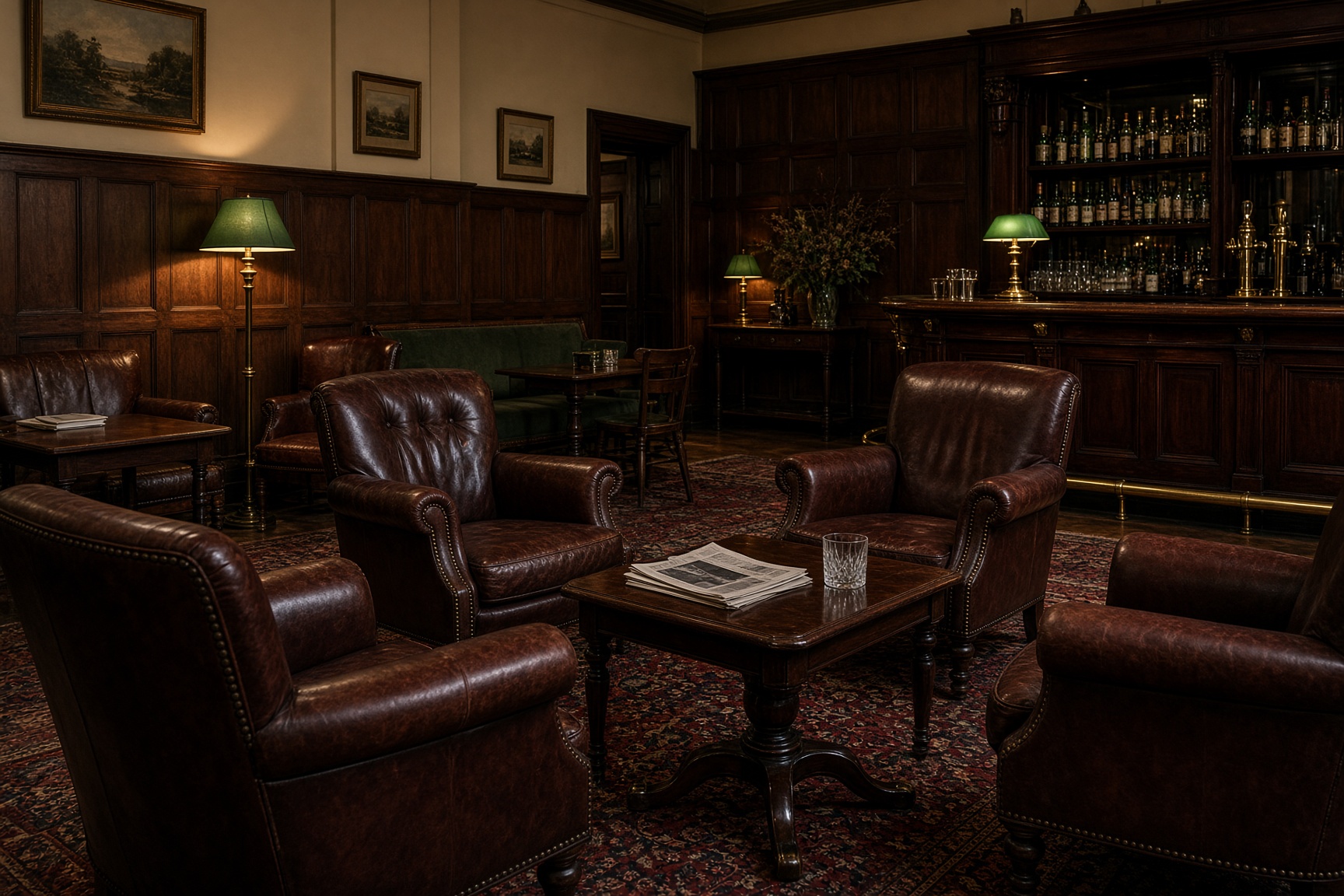
The Drones Club is a composite. Buck’s Club on Clifford Street, founded in 1919, gave it a barman named McGarry. The Bachelors’ Club on Piccadilly gave it rowdiness; the Bath Club, a flavour of leisured sport. Wodehouse himself belonged to the Savage and the Constitutional. Bertie and his pals — Bingo, Tuppy, Catsmeat, Barmy — are the idle young men of Edwardian and 1920s Mayfair, frozen so that the wars never quite arrive.
Bertie Wooster
Bertie’s earlier shape is Reggie Pepper. Scholars argue over the rest. Norman Murphy favoured the actor-manager George Grossmith Jr.; others point to Wodehouse’s distant cousin John Wodehouse, 3rd Earl of Kimberley, a genuine drone of the period. Wodehouse, who knew the type from the clubs and from musical comedy, said the pre-1914 Bertie was “more or less true to life at that time.” The slang, the good-egg code, and the terror of aunts are the character.
Blandings Castle
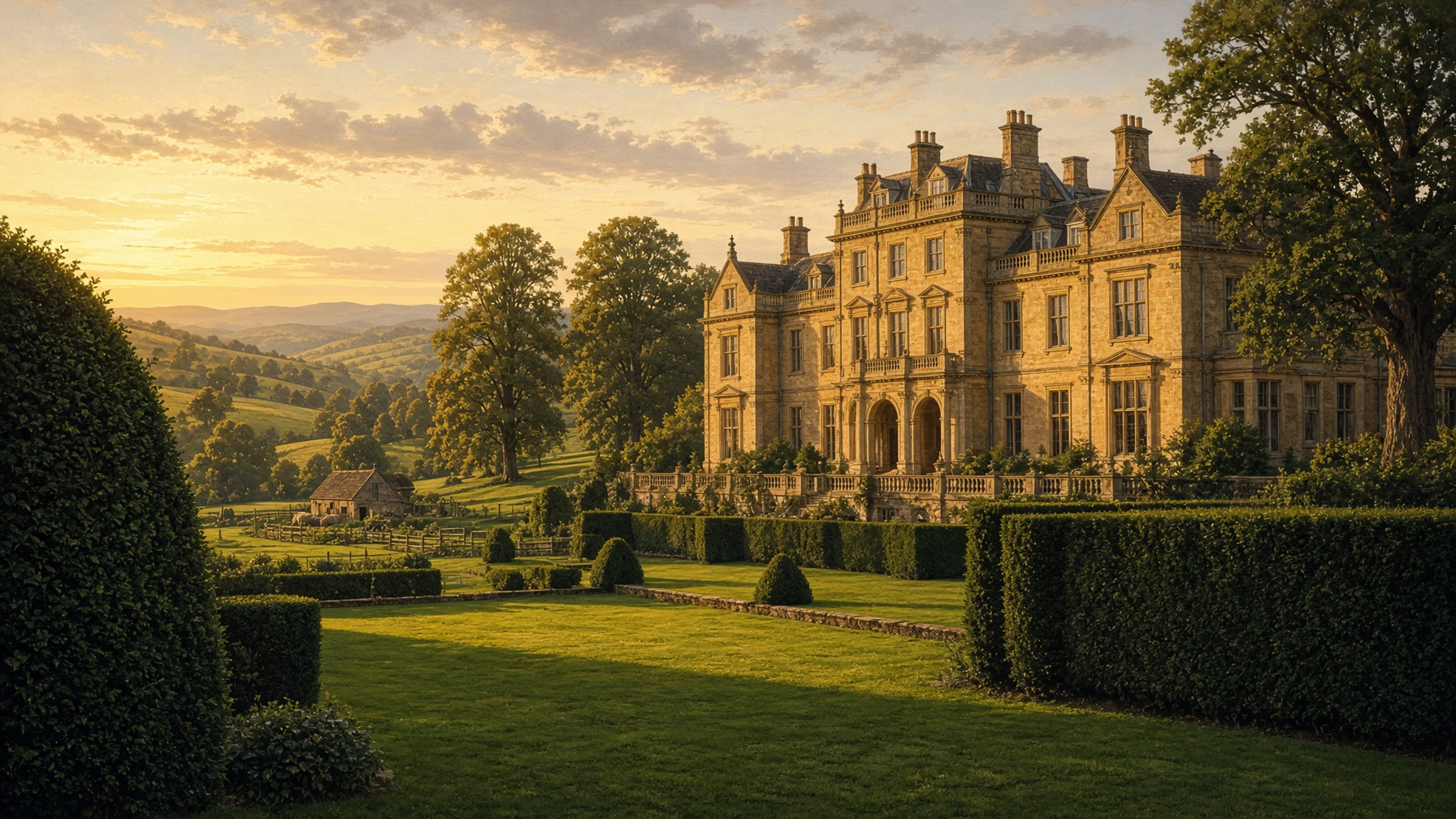
Wodehouse called it a “sort of super-Shropshire.” Norman Murphy spent years matching features to real houses: Sudeley, Weston Park, Corsham, and Hunstanton Hall in Norfolk, which the Wodehouses rented and which contributed the moat, the library, and a sense of endless afternoon. Lord Emsworth’s pig, the Empress, is the most famous animal in English comedy; Galahad Threepwood takes his surname from the Emsworth cottage Wodehouse lodged in as a young man.
Conan Doyle, Gilbert, and the theatre
“Conan Doyle was my hero,” he said late in life. “I was a Doyle man and I still am.” He wrote Holmes parodies, played cricket with Doyle in J. M. Barrie’s Authors XI, and learned plotting from the Sherlockian short story as much as from W. S. Gilbert’s topsy-turvy logic. The Princess Theatre musicals with Bolton and Kern taught him to wind a farce until every door has been used twice. Hollywood, in 1930–31, taught him how to mock a studio.
The floating Edwardian afternoon
The great decision, artistically, was to stop the clock. Bertie goes on saying “What ho” through the 1960s; Blandings never hears a bomber. Wars are downplayed or omitted. The result is not ignorance — Wodehouse had seen internment, exile, and the death of friends — but a made world, as Waugh saw, from which later generations could be released. The inspiration, finally, is the English language itself, tuned until a sentence lands like a mashie on the green.