1881
Guildford, Surrey
Birthplace: 1 Vale Place, now 59 Epsom Road.
Chronology
Filter the years by life, places, or publications — then walk the map from Surrey to Long Island.
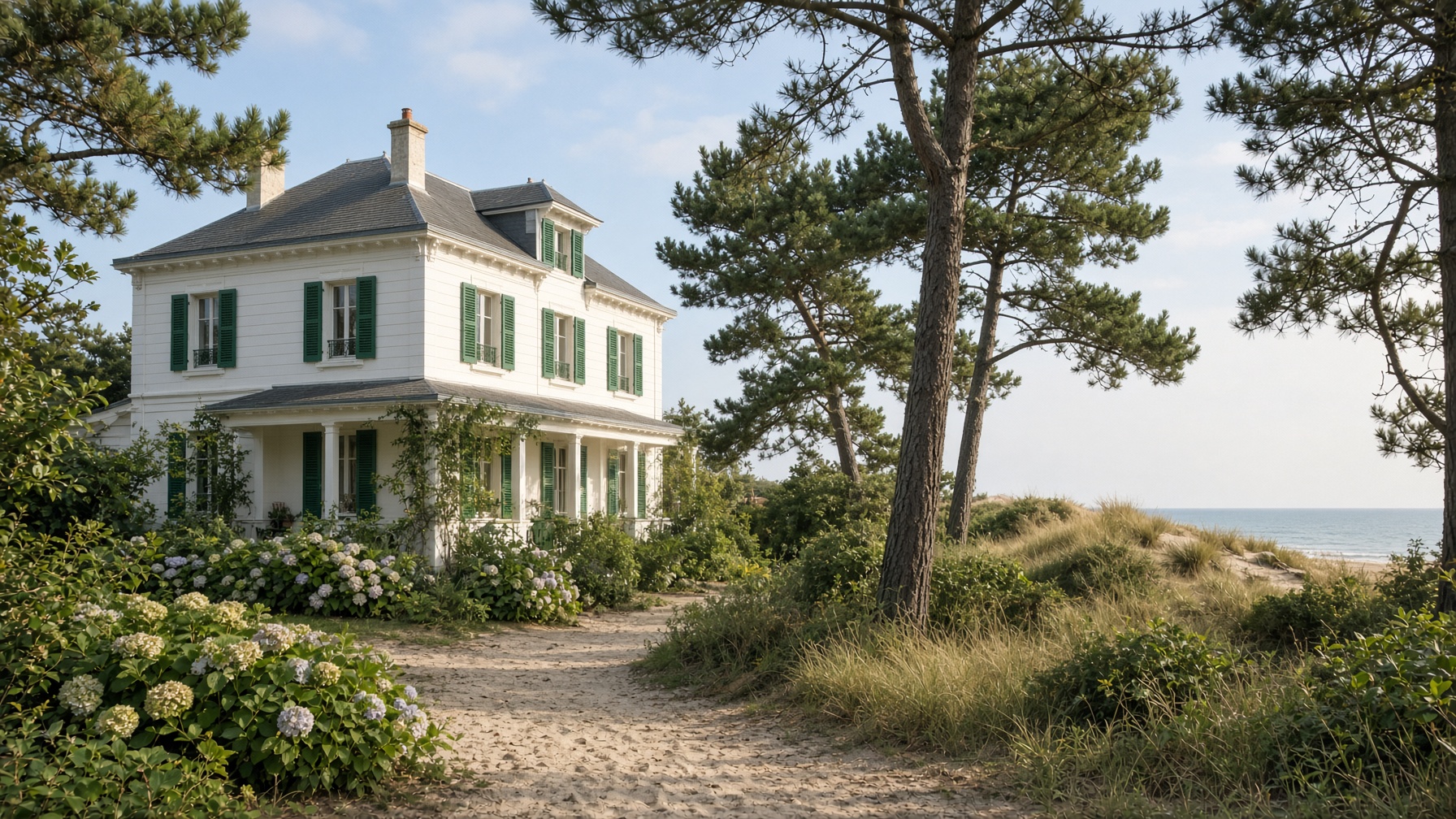
1881 · Life
Pelham Grenville Wodehouse is born on 15 October at 1 Vale Place (now 59 Epsom Road), Guildford, Surrey, the third of four sons of Eleanor Deane and Henry Ernest Wodehouse, a magistrate in the Hong Kong civil service. The name is pronounced “Wood-house”; the family call him Plum.
1882 · Place
At nine months he is taken out to Hong Kong. By 1883 he and his elder brothers are back in England, left with a governess and a procession of aunts while their parents remain in the East. He later said he scarcely saw his father and mother until he was fifteen.
1886–1891 · Place
Dame school in Croydon; Elizabeth College, Guernsey, in 1889; Malvern House, a crammers’ at Kearsney near Dover, in 1891. The prep-school world of aunts, Latin, and cold baths is stored up for later.
1894–1900 · Place
The happiest years. He boards at Dulwich, edits the school magazine, writes comic verse, and stars at cricket and rugby football. He expects Oxford; family money will not stretch, and the Hongkong and Shanghai Bank is waiting.
1900–1902 · Place
A clerk at the Hongkong and Shanghai Bank, 31 Lombard Street, lodging in Chelsea. He writes at night. In September 1901 Punch takes a piece; in 1902 The Pothunters is published and he resigns from the bank.
1902 · Work
First book: a school novel. The Globe soon gives him the comic column “By the Way”. Freelance pieces follow for Punch, The Captain, and a dozen other papers.
1903–1909 · Place
He lodges at Threepwood, a house in Emsworth, Hampshire — the name later given to Galahad and the Blandings clan — and keeps rooms in town. School stories give way to Love Among the Chickens (1906) and Mike (1909), in which Psmith walks on.
1904–1918 · Work
He begins as a lyricist on The Beauty of Bath (1906) and, in New York, forms the Princess Theatre trio with Guy Bolton and Jerome Kern: Oh, Boy!, Leave It to Jane, Oh, Lady! Lady!!. He later contributes lyrics to Show Boat, Rosalie, The Three Musketeers, and Anything Goes.
1909–1914 · Place
He crosses the Atlantic for longer stays, selling to American magazines and testing the New York theatre. Greenwich Village, pulp detective stories, and Vanity Fair drama criticism fill the years before the war.
1914 · Life
On 2 August he lands in New York; the next day he meets Ethel Wayman (née Newton), an English widow. They marry on 30 September at the Little Church Around the Corner and rent a bungalow at Bellport, Long Island. He adopts her daughter Leonora, the “snorky” of his letters.
1915 · Work
The Saturday Evening Post serialises Something Fresh, the first Blandings novel. “Extricating Young Gussie” introduces Bertie and a valet named Jeeves. Poor eyesight keeps Wodehouse out of the army; he spends the war in America.
1916–1923 · Work
“Leave It to Jeeves” (1916) makes the valet the brains of the outfit. My Man Jeeves (1919), The Inimitable Jeeves (1923), and Leave It to Psmith (1923) fix the two great canons.
1920s · Place
The Wodehouses move between New York, London, and the French coast, with dogs always in tow. In 1927 they take a lease on 17 Norfolk Street (now Dunraven Street) in Mayfair. Hunstanton Hall in Norfolk is rented for holidays and feeds the idea of Blandings.
1929–1934 · Work
Summer Lightning (1929), Very Good, Jeeves (1930), Heavy Weather (1933), Thank You, Jeeves and Right Ho, Jeeves (both 1934), The Code of the Woosters (1938): the books on which the reputation rests.
1930–1931 · Place
An MGM contract at a startling salary. He does little that the studio uses and says so to the Los Angeles Times, causing a brief storm. The experience is recycled as Laughing Gas, The Luck of the Bodkins, and a run of Hollywood stories.
1932–1934 · Place
A year near Cannes. In June 1934, to ease double taxation and British quarantine laws that kept the dogs from travelling, they settle at Low Wood in Le Touquet on the Channel coast of France.
1940–1941 · Life
In May 1940 German forces take Le Touquet. Wodehouse, at 58, is interned as an enemy alien: Loos prison, a barracks at Liège, the citadel at Huy, and finally Tost in Upper Silesia (now Toszek, Poland). He writes Money in the Bank in camp. Released in June 1941, a few months short of his sixtieth birthday.
1941 · Life
In Berlin he records five humorous talks on internment for American listeners, at the Germans’ invitation. The tone is light and the mockery of camp life genuine, but Britain is at war and the use of enemy radio looks like collaboration. A “global howl” follows. MI5 later finds no evidence of treachery; the Cussen Report is not published in his lifetime.
1943–1947 · Place
The Wodehouses are moved to occupied Paris. After the war they do not risk a return to England. In 1947 they leave for the United States for good.
1946–1954 · Work
Joy in the Morning (1946), The Mating Season (1949), The Code of the Woosters already behind him, Pigs Have Wings (1952), Jeeves and the Feudal Spirit (1954). The idyll is rebuilt as if the war had not happened.
1952–1975 · Place
They buy a house on Basket Neck Lane in Remsenburg, a quiet village in Southampton township. He takes American citizenship in 1955, walks the dogs, listens to soap operas, and writes every morning.
1960s–1974 · Work
Stiff Upper Lip, Jeeves (1963), Galahad at Blandings (1964), A Pelican at Blandings (1969), Much Obliged, Jeeves (1971), Aunts Aren’t Gentlemen (1974). Nearly a hundred books, more than ninety of them still in print.
1975 · Life
He is appointed KBE in the New Year Honours. On 14 February he dies of a heart attack at Remsenburg, aged 93, a few weeks after the knighthood and with Sunset at Blandings unfinished. A memorial stone was dedicated in Westminster Abbey on 20 September 2019.
A peripatetic life: Surrey, the East, a string of English schools, the City, Hampshire, New York, Mayfair, Hollywood, the Channel coast, a Silesian camp, and a Long Island village.
1881
Birthplace: 1 Vale Place, now 59 Epsom Road.
1882
Infancy with his parents; then sent home for good.
1883–1890
Governess, dame school, and Elizabeth College.
1891–1893
Preparatory school at Kearsney, near Dover — the model for many later prep-school pages.
1894–1900
The school he loved. Cricket, classics, and the magazine.
1900–1903
Hongkong and Shanghai Bank, Lombard Street; lodgings in Walpole Street.
1903–1914
Threepwood cottage: the name-bank for Blandings.
1909–1920s
Greenwich Village, Bellport, Great Neck; marriage in 1914.
1927–1934
17 Norfolk Street (Dunraven Street), the London base of the high years.
1920s–30s
Rented for long visits; a principal real-world flavour of Blandings.
1930–1931
MGM contract; later visits. Fuel for the film-colony farces.
1932–1933
A rented year on the Riviera before the move north.
1934–1940
The French house, bought to escape double tax and dog quarantine.
1940–1941
Internment camp (now Toszek, Poland), after Loos, Liège, and Huy.
1941–1947
The broadcasts; then occupied Paris until the American exile.
1952–1975
The last house: citizenship, knighthood, and the final books.